Storm Damage Repair in Mill Valley, CA
Mill Valley Roofing gets a tarp over the breach first and stops water from wicking into your decking, because on this side of Mount Tamalpais the second storm usually arrives before the first repair is finished. Call 6283135855 and we will schedule a rapid damage inspection. Wind uplift tears shingles at the eave and ridge, hail fractures clay tile and strips asphalt granules, and a downed limb can puncture a metal panel, so the first hour matters more than the first estimate.
Call 6283135855What Storm Damage Repair Involves on a Mill Valley Roof
Storm damage repair is the work of closing a roof that wind, hail, or falling debris has opened, then rebuilding the layers underneath so the next Pacific storm cannot find the same seam. Coastal salt air corrodes metal flashing long before shingles fail, and that corrosion is usually what lets water in.
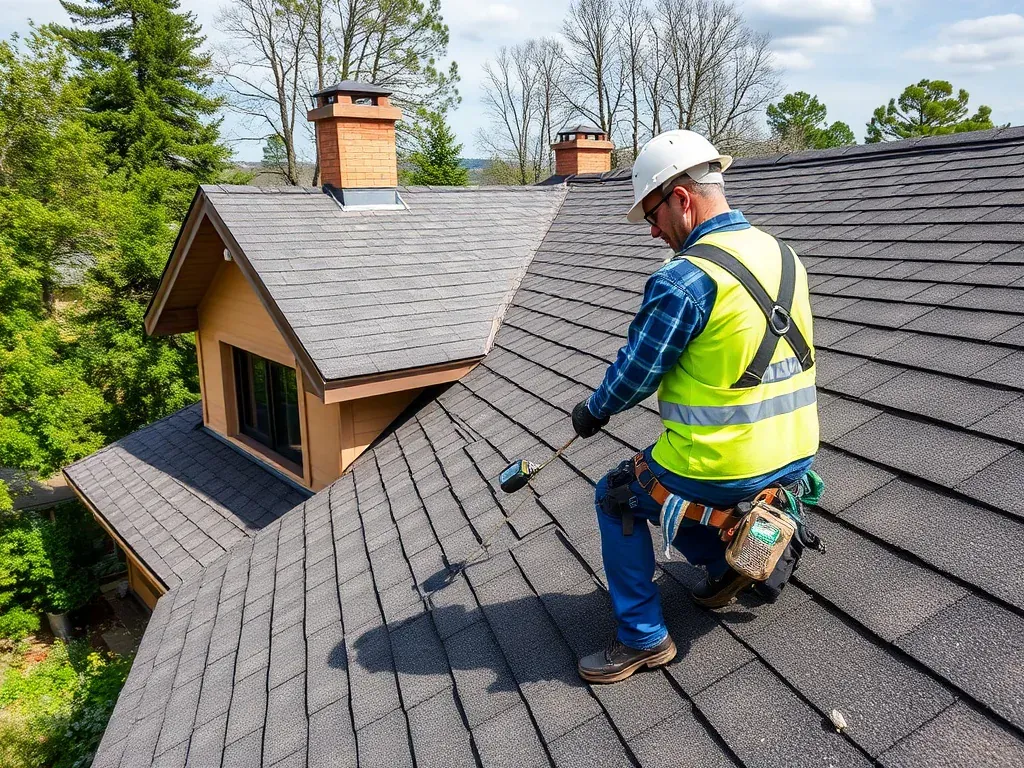
After a winter atmospheric river we walk the rooftop in a fixed order: where water is entering, how far it has traveled, what the decking looks like, and whether the honest answer is a repair or a replacement.
How Wind, Hail, and Debris Actually Break a Roof
- Wind uplift peels shingles at the eave, rake, and ridge, where fasteners have the least surrounding material to grip.
- Hail impact fractures clay tile and knocks granules off an asphalt shingle, leaving bitumen exposed to UV.
- Water intrusion starts when lifted flashing or a torn underlayment lets rain seep past the ice-and-water shield.
- A falling oak limb splits a cedar shake or punctures a metal panel, and the entry hole is almost always smaller than the stain on your ceiling.
- Granule loss collects in the gutter and downspout, so we check the ground before we ever climb the ladder.
How Local Weather Ages a Roof
Fog off the Pacific keeps roof surfaces damp most mornings, and that moisture wicks into fascia, soffit, and sheathing in ways an inland roof never sees. Heavy winter rain then tests every seam at once, and it usually finds the oldest one.
- Coastal fog keeps wood fascia damp, so it rots and pulls fasteners loose from the drip edge.
- Salt air corrodes chimney flashing, step flashing, and counter-flashing, especially where two dissimilar metals touch.
- Pacific storms drive rain sideways into the valley, the hip, and the verge, which is where leaks show up first.
- Snow is rare here, but an ice dam can still form at the eave during a cold snap, backing water under the starter course.
Roofing Materials We Repair and Replace
What we can restore depends on what is up there. We keep replacement stock in the shop for the systems we see most along the roofline around Mount Tamalpais and Muir Woods.
- Asphalt shingle in three-tab and architectural profiles, including Class 4 impact-resistant products from GAF and Owens Corning that some carriers discount.
- Wood shake and cedar shake, matched by exposure and split pattern so a repaired field does not read as an obvious patch.
- Slate, clay tile, and concrete tile, where the repair usually means new underlayment under reused tile.
- Standing-seam panel and other metal panel systems, plus corrugated panel on outbuildings and canopy roofs.
- Low-slope assemblies: TPO, EPDM, and PVC membrane on additions, and built-up roof sections over garages.
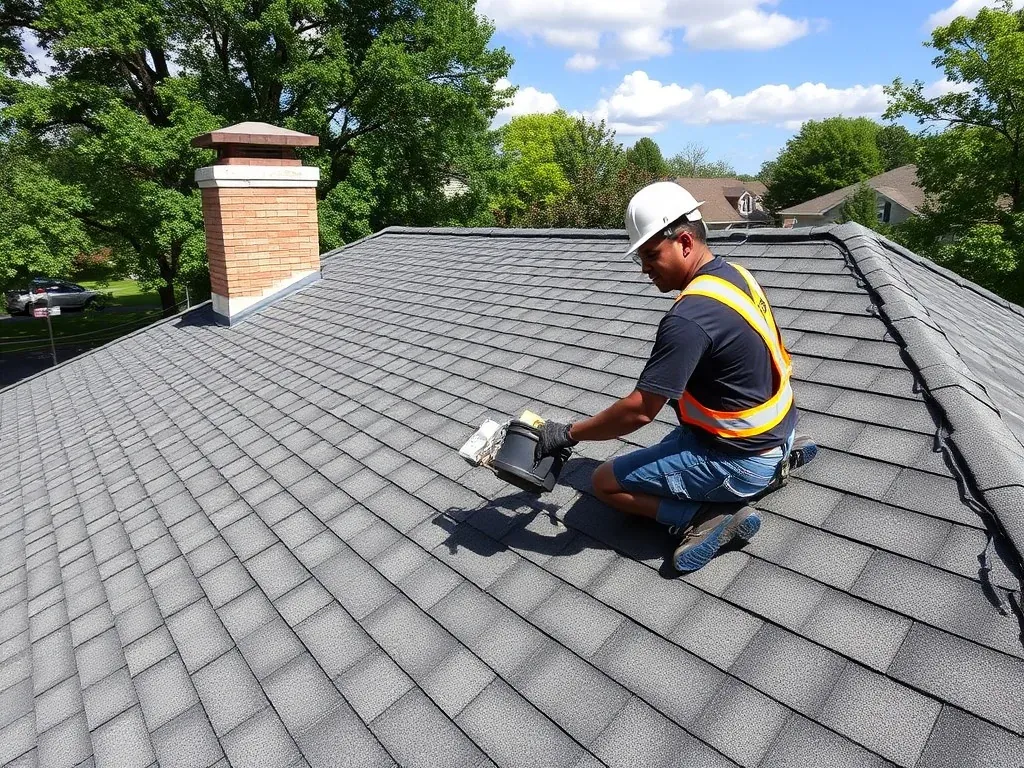
- Modified bitumen and tar-based patches where a full tear-off is not the right call yet.
Flashing, Edges, and the Details That Leak
Most of our callbacks come from details, not from shingles. A roofing contractor who skips the perimeter is guessing with your ceiling.
- Ice-and-water shield is self-adhered membrane that seals the eave and valley before any shingle goes down.
- Synthetic underlayment has largely replaced roofing felt and tar paper, because it does not tear when a crew walks it.
- Drip edge sheds water clear of the fascia, and a missing section is why so many eave boards rot.
- Chimney flashing, apron flashing, and step flashing get counter-flashing cut into the masonry and sealed with caulk or mastic.
- Pipe flashing and the pipe boot or vent boot collar dry out and crack; it is a small part that causes a large stain.
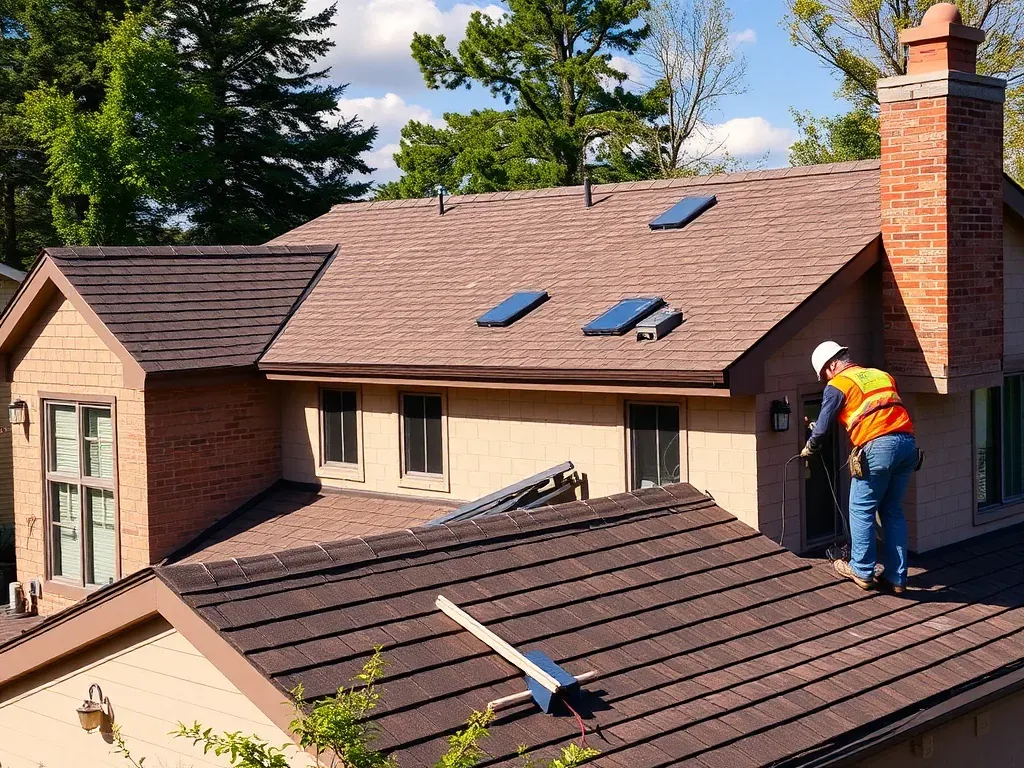
- Skylight curbs and dormer sidewalls get roof cement only as a temporary reseal, never as a permanent fix.
Decking, Structure, and What Sits Under the Shingles
We do not know what a storm did until we see the substrate. Decking tells the real story, and it changes the estimate more than any other single factor.
- Plywood and OSB sheathing that stayed wet long enough will delaminate and lose nail-holding strength.
- Truss and rafter ends blacken or decay where a leak ran for a season; ridge beam and joist damage needs a carpenter, not a roofer.
- Vapor barrier and insulation in the attic tell us whether a stain is a roof leak or a condensation problem.
- Ventilation matters as much as waterproofing: a ridge vent with the right soffit vent intake keeps the deck dry and slows end-of-life wear.
- An attic fan short-cycling or a ridge cap that has buckled both belong in the written roof inspection report.
Tools, Site Setup, and Safety
Real weatherproofing looks like a jobsite, not a ladder and a bucket. Here is what our crews bring, and why it matters to your timeline.
- Scaffold, ladder staging, and a safety harness anchored above the ridge on anything over one story.
- A nail gun fed by an air compressor, plus ring-shank nails and hand-driven fasteners where a nail has to bite through tile.
- A pry bar, roofing shovel, and roofing square for the staggered courses and layout marks we cut on the spot.
- A torch for modified bitumen details, kept well clear of dry felt and bitumen residue.
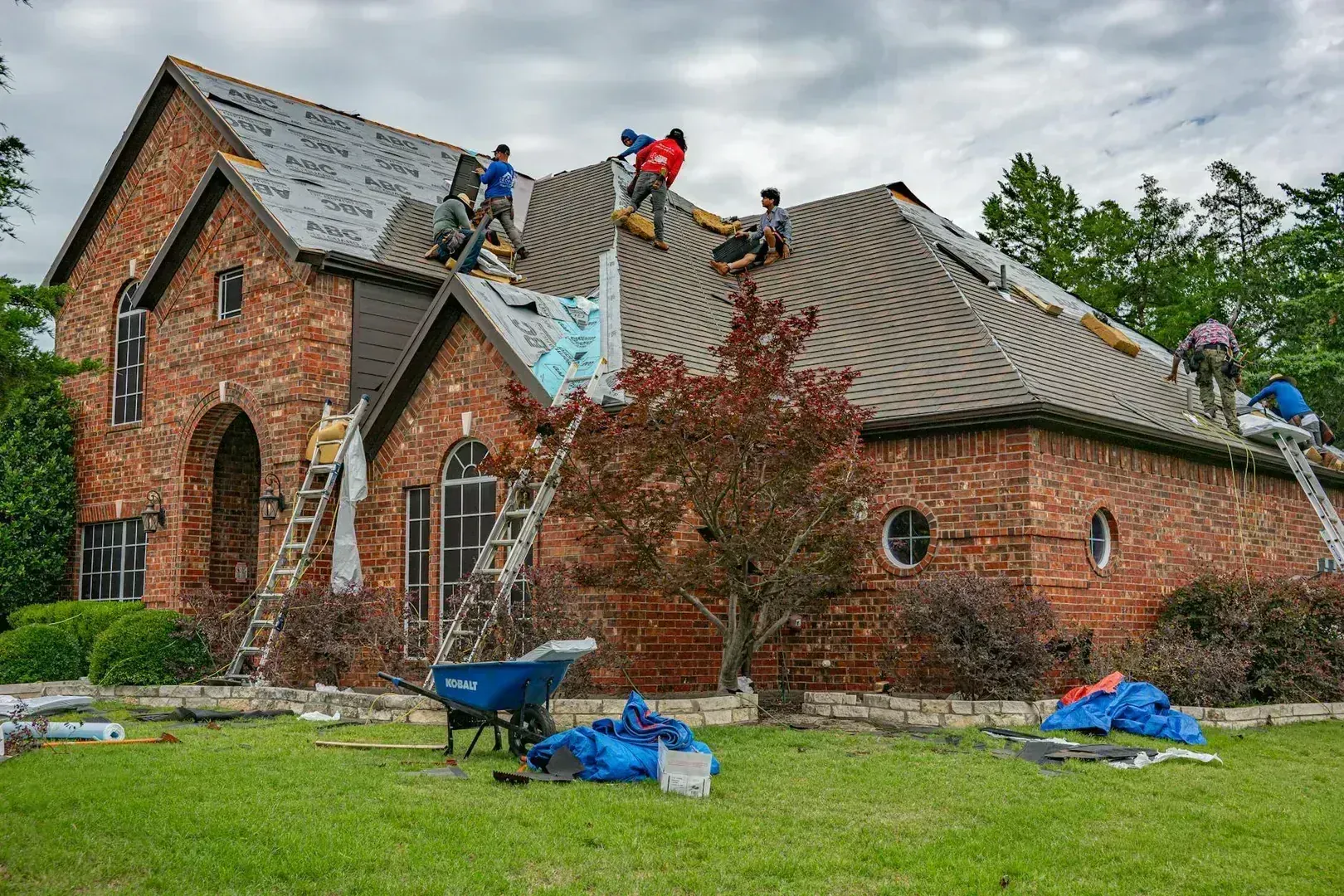
- A dumpster parked before tear-off starts, so debris never sits on your lawn overnight.
- Screw guns, sealant tubes, and treated stock for purlin, batten, and counterbatten repairs on older framing.
Shapes and Features We Repair Around the Region
The roofline here runs from flat to steep, and every shape leaks in its own predictable place. Knowing which one you own saves diagnostic time.
- Gable and hip roofs shed water well but fail at the ridge and hip intersections.
- Mansard and gambrel profiles on older homes hide wall-to-roof transitions behind flashing nobody can see from the ground.
- Parapet walls and coping on commercial buildings need scupper drains cleared of debris before the next storm.
- Awning and canopy roofs over entries catch water and eave damage homeowners rarely notice.
- Gutter and downspout runs matter as much as the roof itself: when a gutter backs up, water erodes the soffit and stains the fascia.
- Chimney and skylight penetrations are the two spots we inspect first after any wind event.
What Storm Damage Repair Costs Here
Cost depends on access, material, and how far water traveled. Steep hillside lots and narrow driveways add staging time that a flat lot never does.
- Emergency tarp and temporary waterproofing: a few hundred dollars, and the best money you will spend before a second storm.
- Spot roof repair, including replaced shingles, a new pipe boot, or a reseal on step flashing: typically a few hundred up to about fifteen hundred dollars.
- Sectional roof replacement over a damaged valley or hip, with new underlayment and decking: mid four figures.
- Full roof replacement after widespread granule loss or end-of-life wear: five figures on a larger home, less if we overlay instead of doing a complete tear-off.
- Flashing packages for chimney flashing, drip edge, and counter-flashing are priced per linear foot and itemized so you can read the roof estimate line by line.
Step by Step: What Happens After You Call
- Phone triage, then a rapid damage inspection scheduled fast, often the same day you call 6283135855.
- On the rooftop we check the ridge, valley, chimney flashing, pipe boot, step flashing, drip edge, and gutter before we open anything.
- We tarp or otherwise waterproof the breach so the decking stops getting wet while the estimate is written.
- We photograph and measure, then write a line-item estimate formatted for your insurer rather than for our file cabinet.
- Repair day: tear-off of damaged material, replacement decking, self-adhered ice-and-water shield, new underlayment, replacement shingles in staggered courses, and flashing resealed.
- Cleanup: debris into the dumpster, a magnet sweep for nails, gutters and downspouts flushed, and a walkthrough of the finished work with you.
Insurance Claims, Adjusters, and Paperwork
Most storm claims do not fail because the damage is not real. They fail because the documentation is thin and the adjuster only sees what is written down.
- We document every elevation with photos and measurements in a format an adjuster can price without a second trip.
- We meet your adjuster inspection on the rooftop so nothing gets missed from the driveway.
- If the first scope comes in low, we file a supplemental claim with the proof of loss form and the storm date attached.
- Building code upgrades, such as adding ice-and-water shield to meet current requirements, are often covered and we call them out.
- We never sign anything on your behalf. That decision stays yours, every time.
Maintenance, Energy Efficiency, and Greener Roofing Choices
- Roof maintenance tips matter more on the coast than inland: clear the gutter and downspout each fall before the first atmospheric river.
- Energy efficiency starts with attic insulation, a balanced ridge vent, and soffit vent intake that keeps the deck near ambient temperature.
- Green roofing and sustainability in roofing can be as simple as cool-rated shingles that reflect UV, or reusing slate and clay tile instead of sending it to landfill.
- Roofing technology has moved quickly. Drone imaging and moisture meters now find a wet roof deck without pulling a single shingle.
- Insurance claims go smoother when your maintenance records are in order, one reason we leave a written roof inspection behind after every visit.
Questions We Get After Every Big Storm
Can storm damage repair wait until spring?
Storm damage repair should not wait when water is actively entering, because a small gap wicks into decking and insulation within days. A tarp buys time. A season of waiting buys a framing repair.
Does a storm damage repair claim cover the tarp?
Storm damage repair claims frequently include emergency waterproofing when it is documented as a mitigation step, and we photograph the tarp installation for exactly that reason.
How long does storm damage repair take?
Storm damage repair typically takes one day for a localized fix and two to four days when decking, underlayment, and flashing all need replacement on the same slope.
Will repaired shingles match the rest of my roof?
Storm damage repair matches best when the roof is under a decade old, because newer asphalt shingle lots fade slightly. On older roofs we set expectations honestly before we order material.
Repair or Replace? Being Straight About the Limits
Storm damage repair is the right answer when damage is localized and the rest of the assembly still has life in it. It is the wrong answer on a roof already showing end-of-life wear across three or more slopes, and we will tell you so.
When we recommend replacement, we show you the photos and the reason. When a repair will hold, we do the repair. We are licensed and insured, we leave a written roof estimate before you commit, and we warranty our workmanship.
What's Included
- Emergency tarp and temporary waterproofing over any open area before we leave the first visit.
- A full roof inspection with dated photos of decking, underlayment, and every flashing detail.
- Replacement shingles matched to your existing profile, laid in staggered courses over new synthetic underlayment.
- New ice-and-water shield at the eave and valley wherever the building code requires it.
- Chimney flashing, step flashing, and drip edge repairs resealed with fresh caulk and mastic.
- Debris haul-off with a dumpster on site, plus gutters and downspouts flushed clean before we go.
- Documentation and adjuster coordination if you are filing an insurance claim.
- A written roof estimate up front and a workmanship warranty on the finished repair.
Our Storm Damage Repair Process
- Call 6283135855 and describe what you are seeing. We triage over the phone and schedule a rapid damage inspection, often the same day.
- On the roof we check the ridge, valley, chimney flashing, pipe boot, step flashing, drip edge, and gutter before we open anything.
- We tarp or otherwise waterproof the breach so the decking stops getting wet while the roof estimate is written.
- We document with photos and measurements and write a line-item estimate formatted for your insurer.
- Repair day: tear-off of damaged material, replacement decking, self-adhered ice-and-water shield, new underlayment, replacement shingles, and flashing resealed with fresh sealant.
- Cleanup: debris into the dumpster, a magnet sweep for nails, gutters and downspouts flushed, then a walkthrough of the finished work with you.
Signs You Need Storm Damage Repair
Signs You Need Storm Damage Repair in Mill Valley
- Missing or curled shingles on the roof after a wind event, especially along the eave, rake, and ridge.
- Granule loss collecting in the gutters or downspouts, which means the asphalt is already exposed to UV.
- Dented or cracked roof tiles visible from the ground, even when the ceiling below still looks dry.
- Water stains on ceilings or attic walls, which usually means water has been wicking along the decking for weeks.
- Chimney flashing and counter-flashing pulling away from the masonry as coastal salt air corrodes the metal.
- Heavy winter rain from Pacific storms driving sideways into a valley, showing up as a drip far from the actual gap.
- Debris from an oak or eucalyptus limb puncturing a metal panel or splitting a cedar shake.
- An ice dam or backed-up gutter at the eave after a cold snap, pushing water under the starter course.
Don't just take our word for it — hear from our satisfied customers.
"A February storm took shingles off our ridge and we had water on the ceiling by morning. Mill Valley Roofing tarped it that afternoon, met our adjuster on the roof, and had new underlayment and replacement shingles on within the week. The stain never grew past the size of my hand." Dana R., Alto
"We thought we just needed a roof repair. They opened the valley and found the plywood sheathing was wet and starting to delaminate. Straight answer, no upselling, and the new drip edge fixed a fascia rot problem we had been ignoring for years." Marcus T., Homestead Valley
"Fog and salt air had eaten the chimney flashing on our 1950s house. They cut in new counter-flashing, resealed the pipe boot, and cleaned the gutters and downspouts before they left. Second rainy season and not a drop inside." Priya S., Strawberry
Ready to get started? Call us today at 6283135855 for a free estimate.
Free estimates · Licensed & Insured certified · up to 50-year warranty
Call 6283135855